Quick Answer
Most standard parcel couriers do not accept biological samples under their standard terms and conditions. Biological samples are typically transported by dedicated medical couriers that understand UN3373 packaging requirements, provide direct A-to-B transport, maintain documented chain of custody, and offer 24/7 collection. Choosing the wrong courier risks regulatory non-compliance, sample degradation and lost diagnostic value.
At a Glance: Biological Sample Courier Checklist
Before booking any courier for biological sample transport, confirm they can meet all of the following:
✅ Familiarity with UN3373 classification and triple-packaging requirements
✅ Dedicated vehicle – no shared loads or depot handling
✅ Direct A-to-B transport from collection to delivery
✅ Full chain of custody documentation including timestamps and signatures
✅ 24/7 availability including weekends and bank holidays
✅ Driver briefed on consignment type and appropriate incident response
✅ Correct temperature handling for your sample type
✅ Proof of delivery with recipient name, signature and timestamp
Which Couriers Can Deliver Biological Samples in the UK?
Biological sample transport is one of the most misunderstood areas of UK courier logistics. Many organisations – from NHS pathology departments to private laboratories, IVF clinics, clinical research sites and biotech companies – discover too late that their usual courier cannot legally or safely accept their samples under standard terms.
This guide explains the UK regulatory framework, what genuinely compliant biological sample transport looks like in practice, the temperature requirements for different sample types, and how to assess whether a courier is properly equipped to handle your requirements.
What Counts as a Biological Sample?
The term covers a broad range of materials used in clinical diagnostics, medical research, pathology and life sciences. Common examples transported by dedicated couriers in the UK include:
- Blood, serum and plasma samples
- Urine, stool and swab specimens
- Tissue and biopsy samples
- Cerebrospinal fluid
- Saliva and sputum samples
- Pathology specimens in formalin or preservative media
- Microbiological cultures and isolates
- DNA and RNA samples for genetic research and screening
- IVF embryos, gametes and reproductive materials
- Dried blood spots and filter paper samples
- Cell lines and plasmid preparations
- Histology slides and blocks
Each may carry different temperature, handling, packaging and documentation requirements depending on their classification and the nature of the receiving facility.
The UK Regulatory Framework
ADR and the CDG Regulations
Biological samples transported by road in the United Kingdom fall under the Carriage of Dangerous Goods and Use of Transportable Pressure Equipment Regulations 2009 (CDG Regulations), which implement the European Agreement concerning the International Carriage of Dangerous Goods by Road (ADR) into UK law.
Biological substances fall under Class 6.2 – Infectious Substances, divided into two categories with significantly different transport requirements. Full ADR guidance is available from GOV.UK and the UK Health Security Agency (UKHSA).
The WHO Guidance on Regulations for the Transport of Infectious Substances provides the international framework underpinning UK and international classification standards.
UN3373 – Category B Infectious Substances
UN3373 is the most common classification for biological samples transported in UK clinical and research settings. It applies to Category B infectious substances – materials transported for diagnostic or investigational purposes that are not known or reasonably expected to contain pathogens capable of causing serious disease in healthy humans or animals.
UN3373 covers the vast majority of diagnostic biological samples, including blood samples for routine testing, pathology specimens, microbiological samples, and research specimens not meeting Category A criteria.
Packaging requirements for UN3373:
| Layer | Requirement |
|---|---|
| Primary receptacle | Leak-proof sample container, clearly labelled |
| Secondary packaging | Watertight container enclosing primary, with absorbent material between the two |
| Outer packaging | Rigid outer box marked with UN3373 diamond mark and “Biological Substance, Category B” |
For air transport, IATA Packing Instruction 650 applies – the same triple-packaging principle with additional requirements for absorbency and outer packaging strength.
A note on ADR licensing for UN3373: Category B samples fall within the excepted quantities provisions of ADR. Specialist ADR-licensed vehicles and driver ADR certificates are not typically required for UN3373 consignments alone. However, correct packaging, labelling and documentation remain legally required, and the courier must be informed of the nature of the consignment.
UN2814 and UN2900 – Category A Infectious Substances
Category A substances are those known or reasonably expected to cause serious human or animal disease – assigned UN2814 (human pathogens) or UN2900 (animal pathogens). These require:
- Full ADR compliance including driver ADR certification for Class 6.2
- P650 packaging specification
- Vehicle marking and placarding
- Emergency information sheets
The transport of Category A substances is highly specialist. The majority of clinical and diagnostic biological sample transport does not involve Category A materials, but classification must always be confirmed before booking.
Human Tissue Authority (HTA)
Samples involving human tissue – including organs, tissues for transplantation, certain research samples and post-mortem materials – fall under the regulatory oversight of the Human Tissue Authority. Logistics arrangements for HTA-regulated materials must be consistent with HTA licensing and consent requirements.
MHRA Good Distribution Practice (GDP)
For pharmaceutical companies and clinical research organisations transporting investigational medicinal products (IMPs) or pharmaceutical samples, MHRA Good Distribution Practice (GDP) guidelines apply. GDP sets standards for temperature control, documentation, traceability and quality management.
Temperature Requirements for Biological Sample Transport
Temperature control is one of the most critical – and most frequently misunderstood – aspects of biological sample logistics. Different sample types require different temperature ranges:
| Sample Type | Required Temperature | Common Examples |
|---|---|---|
| Ambient | 15-25°C | Most standard diagnostic swabs, fixed specimens in formalin |
| Refrigerated | 2-8°C | Blood samples, serum, plasma, most routine diagnostic specimens |
| Frozen | -20°C | Certain research samples, plasma for coagulation studies |
| Ultra-low frozen | -80°C | Cell lines, RNA samples, certain research biobank specimens |
| Dry ice | -78.5°C (sublimation) | Frozen biological materials requiring extended transit |
| Cryogenic | -196°C (liquid nitrogen) | IVF embryos, gametes, certain stem cell preparations |
A note on dry ice transport: Dry ice sublimates from solid to gas during transit, releasing carbon dioxide. Adequate ventilation is essential in enclosed vehicles. Biological samples should not be in direct contact with dry ice as the extreme temperature can damage certain specimen types.
Can biological samples travel at ambient temperature?
Many standard diagnostic specimens – including formalin-fixed tissue, certain swabs and dried blood spots – can be transported at ambient temperature. However, ambient transport is not appropriate for blood samples requiring analysis of temperature-sensitive markers, or for any sample where degradation risk increases above 8°C. Always confirm temperature requirements with your receiving laboratory before booking.
Why Standard Parcel Couriers Are Not Suitable
In practice, many laboratories and healthcare organisations discover that their usual parcel carrier cannot accept biological samples under its standard terms only when they try to book. Most major UK parcel networks explicitly exclude biological substances and infectious materials from their general service agreements – and with good reason. Standard parcel networks are designed for volume handling, not specimen integrity.
| Requirement | Standard Parcel Network | Dedicated Same-Day Courier |
|---|---|---|
| Dedicated vehicle | ❌ No | ✅ Yes |
| Depot handling | ❌ Multiple depot stops | ✅ None – direct A-to-B |
| Chain of custody | ❌ Delivery confirmation only | ✅ Full documented chain |
| Driver awareness | ❌ Typically uninformed | ✅ Briefed on consignment |
| Temperature control | ❌ Uncontrolled | ✅ Matched to sample requirements |
| 24/7 availability | ❌ Limited hours | ✅ Round the clock |
| Biological sample acceptance | ❌ Usually excluded | ✅ Standard service |
| Time-critical delivery | ❌ Next day standard | ✅ Same-day within hours |
Who Is Responsible for Packaging Biological Samples?
This is one of the most frequently asked questions – and one where responsibility is sometimes misunderstood.
The sender is legally responsible for ensuring that biological samples are correctly classified, packaged and labelled before handover to the courier. Under the CDG Regulations, it is the consignor’s duty to:
- Correctly classify the substance (Category A or Category B)
- Package it in accordance with UN3373 (or UN2814/UN2900 for Category A)
- Apply the correct labelling to the outer packaging
- Provide appropriate documentation
The courier’s responsibility begins once the correctly packaged consignment is handed over. The courier must:
- Ensure drivers are informed of the nature of the consignment
- Handle and transport the consignment appropriately
- Maintain documented chain of custody throughout
- Follow correct procedures in the event of spillage or damage
A practical note: While the legal packaging responsibility sits with the sender, a knowledgeable courier will check packaging compliance before collection and flag any concerns. If a consignment is incorrectly packaged, accepting it and proceeding creates risk for both parties. This is one reason why working with a specialist courier – rather than a general parcel network – reduces overall compliance risk.
Which Courier Services Handle Biological Samples in the UK?
Dedicated Same-Day Couriers
Dedicated same-day courier services – where a single vehicle is dispatched exclusively for one consignment – are the most appropriate option for the majority of biological sample transport requirements. They provide direct A-to-B transport, full chain of custody, driver accountability and the flexibility to collect and deliver outside standard hours.
Specialist Medical Logistics Companies
Some logistics providers focus specifically on healthcare and life sciences, offering temperature-controlled vehicles with validated data logging, specialist packaging and regulatory compliance as core service features. These are well suited to higher-volume contracted medical logistics programmes, GP surgery collection rounds and scheduled laboratory routes.
Overnight Specialist Networks
Can biological samples be transported overnight? Yes – in certain circumstances overnight transport is appropriate, particularly for non-urgent specimens where the receiving laboratory operates standard daytime hours. However, overnight transport introduces additional risk factors: extended transit time, more handling points and less direct chain of custody than a same-day dedicated service. For time-critical, high-value or temperature-sensitive samples, same-day dedicated transport is strongly preferred.
A Real-World Example
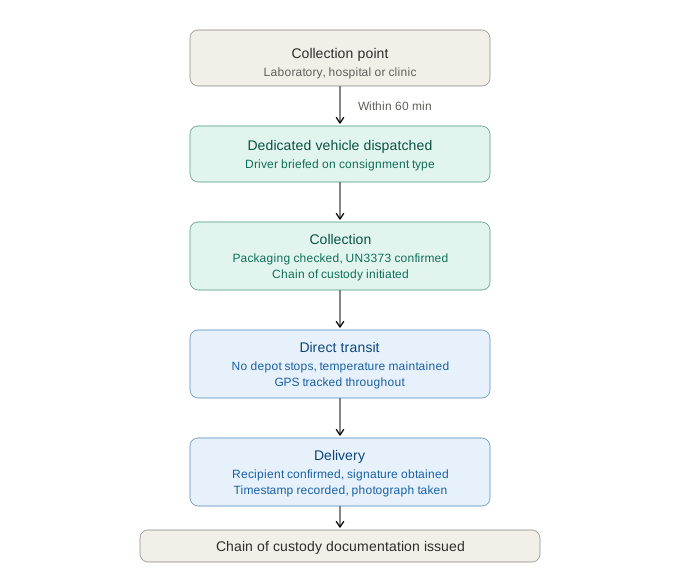
A private diagnostic laboratory required an urgent UN3373 specimen transfer between two hospital sites after normal working hours. The laboratory’s usual next-day carrier had already completed its final collection for the day and could not accommodate an out-of-hours booking. A dedicated vehicle was dispatched within 45 minutes of the call, collected from the sending hospital’s pathology department, and delivered directly to the receiving laboratory – no depot stops, no transfer points, no shared vehicle. A full chain of custody record including collection time, driver details, delivery time and recipient signature was provided within the hour of delivery.
This type of requirement – urgent, out-of-hours, requiring direct transport and documented chain of custody – is among the most common scenarios handled for healthcare and research clients across the UK.
Common Mistakes Organisations Make When Booking Biological Sample Transport
1. Assuming their standard courier will accept the booking
Most major parcel networks exclude biological samples. Discovering this after collection – or at the point of delivery refusal – creates significant operational disruption and potential sample loss.
2. Focusing on cost over compliance
The cost of a non-compliant delivery – in terms of lost diagnostic value, repeat collection, regulatory consequences or patient impact – almost always exceeds any saving on transport.
3. Not confirming temperature requirements in advance
Booking ambient transport for a refrigerated specimen is a common and avoidable error. Always confirm temperature requirements with the receiving laboratory before booking.
4. Not confirming chain of custody requirements
Different organisations have different documentation requirements. Confirming these before booking prevents gaps in the audit trail.
5. Assuming UN3373 classification without checking
Not all biological samples are Category B. Incorrect classification creates compliance risk. When in doubt, consult the UKHSA guidance or your internal biosafety officer.
6. Using a courier unfamiliar with healthcare facility access
Hospital sites, NHS facilities and research institutes have specific access requirements, sign-in procedures and goods reception protocols. A courier unfamiliar with these environments will be slower, less professional and potentially unable to access the collection or delivery point.
Questions to Ask a Biological Sample Courier Before Booking
These questions will quickly establish whether a courier genuinely understands biological sample transport:
- Are you familiar with UN3373 classification and the triple-packaging requirement?
- Will my samples travel on a dedicated vehicle with no other consignments on board?
- Can you provide a full chain of custody record including collection time, driver identity and delivery confirmation with recipient signature?
- Can you match the temperature requirements for my specific sample type?
- Do you operate 24/7 including weekends and bank holidays?
- Have you previously collected from or delivered to our type of facility?
- What is your process if a sample container is found to be damaged or leaking at collection?
- Are your drivers briefed on the nature of the consignment before collection?
Biological Sample Transport Chain
📋 Free Resource: Biological Sample Transport Compliance Checklist
A printable pre-collection checklist used by laboratories, healthcare providers and clinical research organisations across the UK. Covers UN3373 compliance, packaging verification, chain of custody initiation and proof of delivery requirements.
Enter your name and email below to download instantly – it’s free.
All resources are free to download. No account required.
How White Atlas Logistics Supports Biological Sample Transport
White Atlas Logistics provides dedicated same-day transport for biological samples across the UK, including UN3373 Category B specimens, pathology samples, blood and serum, DNA and RNA preparations, and clinical research materials.
Where dedicated transport has been selected, every biological sample consignment travels directly from collection point to destination with no depot handling, no shared loads and no unnecessary touchpoints. We support NHS organisations, private healthcare providers, universities and clinical research organisations with both urgent same-day collections and scheduled regular transport arrangements.
Our service includes full chain of custody documentation, time-stamped proof of delivery with recipient name and signature, and direct contact with our operations team 24/7 – no automated systems, no call centres.
In many areas we can typically dispatch a dedicated vehicle within around 60 minutes, subject to location and vehicle availability.
For organisations with regular biological sample transport requirements, we offer dedicated account arrangements with scheduled collections, monthly invoicing and a named operations contact.
→ Biological Sample Courier Service
→ Healthcare & Medical Courier Services
→ Laboratory Courier Service
→ Blood & Organ Courier Service
Further Reading and Official Guidance
- GOV.UK – Carriage of Dangerous Goods Technical Guidance
- UK Health Security Agency (UKHSA)
- Human Tissue Authority
- MHRA Good Distribution Practice Guidance
- WHO Guidance on Transport of Infectious Substances
- IATA Dangerous Goods Regulations
Frequently Asked Questions
Can standard parcel couriers deliver biological samples in the UK?
Most standard UK parcel networks explicitly exclude biological samples and infectious substances from their standard terms. Even where a booking is accepted, standard parcel services do not provide the dedicated handling, documented chain of custody or driver awareness that biological sample transport requires. A specialist dedicated courier is strongly recommended.
What is UN3373 and does it apply to my samples?
UN3373 is the UN number assigned to Category B infectious substances – biological samples transported for diagnostic or investigational purposes that are not expected to cause serious disease in healthy humans or animals. It covers the majority of clinical and diagnostic samples transported in the UK. If you are unsure of your sample’s classification, consult your biosafety officer or the UKHSA guidance.
What is the difference between UN3373 and UN2814?
UN3373 covers Category B substances unlikely to cause serious disease, transported for diagnostic purposes. UN2814 covers Category A substances known to cause serious or potentially fatal disease. Category A transport requires full ADR compliance including specialist driver certification. The majority of clinical biological samples in the UK are Category B (UN3373).
Who is responsible for packaging biological samples for transport?
The sender (consignor) is legally responsible for correct classification, packaging and labelling before handover to the courier. The courier is responsible for handling and transporting correctly packaged consignments appropriately and maintaining chain of custody. A knowledgeable courier will check packaging compliance before collection.
Can biological samples travel at ambient temperature?
Some samples – including formalin-fixed specimens and certain dried blood spots – can travel at ambient temperature. Most routine clinical specimens require 2-8°C refrigeration to maintain integrity. Always confirm temperature requirements with your receiving laboratory before booking.
Can biological samples be transported overnight?
Yes, overnight transport is possible for certain non-urgent specimens. However, extended transit time, additional handling points and reduced chain of custody continuity make same-day dedicated transport the preferred option for time-critical, temperature-sensitive or high-value samples.
Do biological sample couriers need ADR certification?
For UN3373 Category B samples, ADR driver certification is not typically required as these fall within the excepted quantities provisions. Correct packaging, labelling and documentation remain legally required. For Category A substances, full ADR compliance including driver certification is mandatory.
How should biological samples be packaged for road transport?
UN3373 samples require a triple-packaging system: a primary leak-proof receptacle, a secondary watertight container with absorbent material, and a rigid outer packaging marked with the UN3373 diamond and “Biological Substance, Category B.” Packaging is the sender’s legal responsibility.
Can you collect biological samples outside normal working hours?
White Atlas Logistics operates 24 hours a day, 7 days a week. Out-of-hours and emergency biological sample collections are a routine part of our service.